
ATEX Electric Motor: a Silent Risk with Major Consequences
A certified Ex motor.
Correct marking.
Hazardous area classification aligned with the installation.
And still, the risk can arise exactly where nobody is looking.
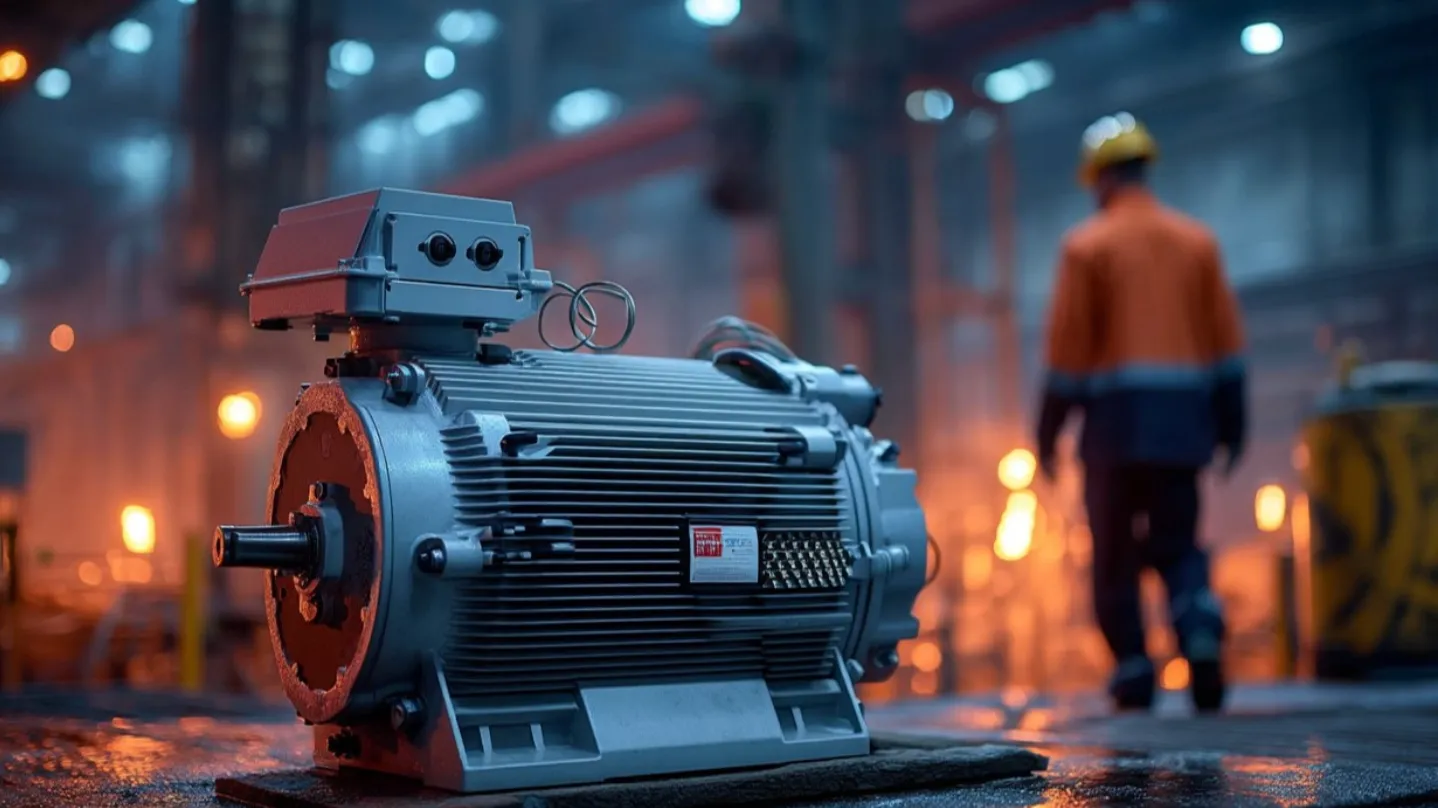
During an inspection in an industrial plant, an Ex d motor appears to be operating without any problem. No alarms. No visible defects. No obvious deviation from the specification.
But a closer assessment shows a different picture.
The motor is misaligned.
The belt tension is too high.
Cooling is restricted by build-up and poor airflow around the installation.
And the installation was put into service without a complete verification against the installation requirements.
What does this mean?
An Ex motor is not explosion-safe simply because it has a certificate.
It is explosion-safe only under defined conditions.
The certificate, marking and EU or UK conformity documentation confirm that the equipment has been designed and assessed for use in potentially explosive atmospheres within specified limits. They do not prove that the motor has been correctly installed, correctly aligned, adequately cooled, properly connected, maintained in accordance with the manufacturer’s instructions and still operated within its certified conditions.
In Europe this follows from the logic of the ATEX equipment framework under Directive 2014/34/EU and the workplace requirements under Directive 1999/92/EC. In the United Kingdom the same operational principle is reflected in DSEAR, while equipment placed on the GB market is addressed through the Equipment and Protective Systems Intended for Use in Potentially Explosive Atmospheres Regulations 2016.
For the user, the decisive question is therefore not only whether the motor was supplied as suitable Ex equipment. The decisive question is whether the complete installation still maintains the required protection level under real operating conditions.
An incorrect installation can increase mechanical loading.
Poor cooling can raise surface temperatures beyond the temperature class or the assessed maximum surface temperature.
An incorrect connection can introduce an electrical ignition risk.
Insufficient maintenance can degrade the type of protection.
Misalignment, excessive belt tension, contamination, blocked ventilation paths, bearing degradation or changed process loads can together turn a compliant component into a weak point in the explosion protection concept.
One minor deviation may not immediately create a dangerous situation.
Several minor deviations can together create a real ignition risk.
That is the core of explosion protection.
The component alone is not decisive.
The decisive factor is the relationship between equipment selection, installation, operating conditions, inspection and maintenance.
In practice, too much attention is often given to certificates and markings. They are essential, but they are not the whole safety case. Explosion safety is achieved only when the equipment is selected, installed, inspected and maintained as part of a coherent system.
For electrical installations in explosive atmospheres, IEC/EN IEC 60079-14 provides the framework for design, selection, installation and initial inspection. IEC/EN IEC 60079-17 provides the framework for inspection and maintenance during service. IEC/EN IEC 60079-19 becomes relevant when repair, overhaul or reclamation affects Ex equipment. For non-electrical or mechanical ignition risks, EN ISO 80079-36 and EN ISO 80079-37 remain important references.
The real question is therefore not:
“Is this motor ATEX-certified?”
The real question is:
“Is this motor still operating within its explosion-protected design and within the assumptions of the hazardous area classification, the risk assessment and the explosion protection documentation?”
That is where certificates end and real explosion safety begins.
https://exquintia.com/
#ATEX #ExplosionSafety #DSEAR #IEC60079 #IECEx #ExMotor #HazardousAreas #ProcessSafety #AssetIntegrity #Inspection #Maintenance #ChemicalIndustry #FoodIndustry #IndustrialSafety #Exquintia